Origin
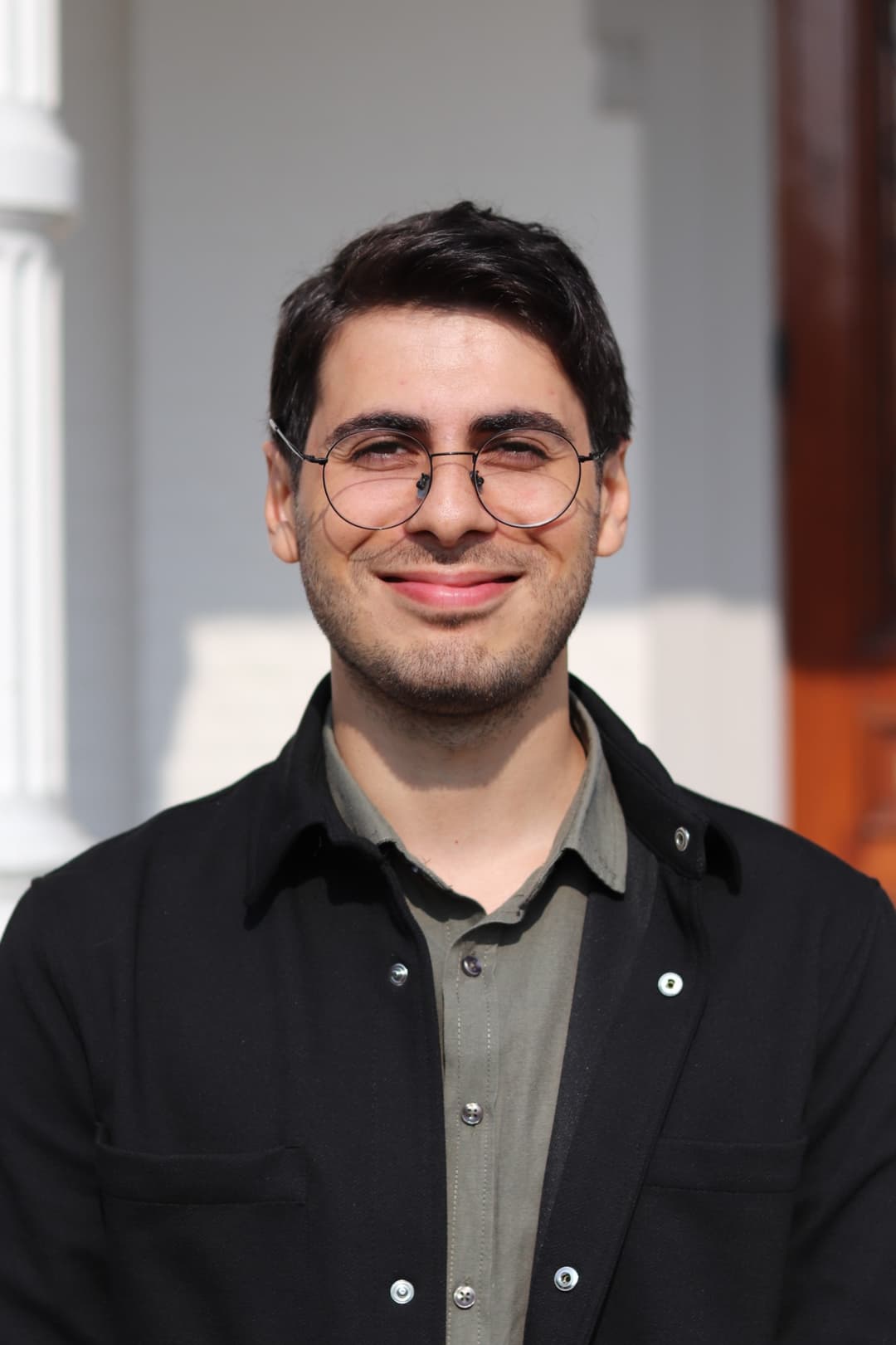
Since childhood, I've been the kind of person who digs into history books and encyclopedias. My teachers nicknamed me “newspaper on foot” for always knowing what was going on. I had one big ideal early on: I want to change the world we are living in.
That ambition took me to Middle East Technical University, where I studied International Relations with a minor in Psychology. I always followed this motto: I will either find a way, or make one. It took me to the Netherlands on a Jean Monnet Scholarship for a master's degree, and eventually to the UN Global Compact Network Netherlands, where I worked on climate programs, supply chain decarbonization, and science-based target setting. Currently, I am working as a Sustainable Business Lecturer at Hotel Management School Maastricht.
The frustration
In this role I grew frustrated with something missing in business sustainability education: we talk about mindset shifts and theories, but rarely dive into what is actually happening on the ground and how we are connected to it. We are not ambitious enough, quite understandable with the low amount of hours or budget allocated to such an ambition. I wanted to teach my students about nature impact for Science-based Targets for Nature, yet there were no accessible tools or examples to work with.
When WRI (Fitts et al., 2025) published their methodology on statistical land use change in late 2025, I thought: I can use this as a starting point. If there is no example, I will make one. Even if it is imperfect, it can always be improved.
Building it
That's how I made this tool. I spent long hours gathering and processing datasets, fine-tuning the pipeline, and repeatedly checking every step. During the process, I relied heavily on AI coding agents, even though AI use is not in itself climate and nature friendly due to water use and emissions. However, if it helps reduce more impact than it caused, I think that's a fair game. At least I did not use it to re-create Lord of the Rings, draining lakes in the process.
Why it matters
The result brings together trade data, environmental impact, ecosystem integrity, species data, and socioeconomic context, because you cannot understand deforestation without understanding poverty. A farmer who is clearing forest is not necessarily acting immorally. Sometimes poverty forces people to do anything possible to survive. Not everyone can afford an environmentally friendly life. But solutions exist, and they can be achieved if we support them.
This tool is for anyone connected to food: organizations, restaurants, universities, students, individuals. I want people to be aware that the food they buy does not produce itself. It is produced by people living in certain conditions, by nature that might be degraded or under threat, but can also offer opportunities. If this tool helps even one person to see that connection, it has done its job.
Get in touch
Found an error, have an idea, or want to collaborate? Email me at [email protected].
A note on AI
The tool was developed with extensive use of AI-assisted coding (Anthropic Claude). The methodology, data architecture, and analytical decisions are my own. If you find errors, have ideas, or want to collaborate, please reach out.